Tem Piute
Silver Project
Executive Summary
The Tem Piute Project is a historic silver district in Lincoln County, Nevada, where past mining reportedly produced ore grading 400–2,500 g/t silver. Known mineralization extends across roughly 3 kilometers and includes silver with locally significant lead and zinc. Despite this scale and grade, exploration has been limited and the district has never been systematically tested using modern methods. Nevada Legacy envisions the potential to define the continuity of the known silver zones and evaluate the potential for larger mineralized bodies at depth. The Tem Piute Project is available for sale or option.
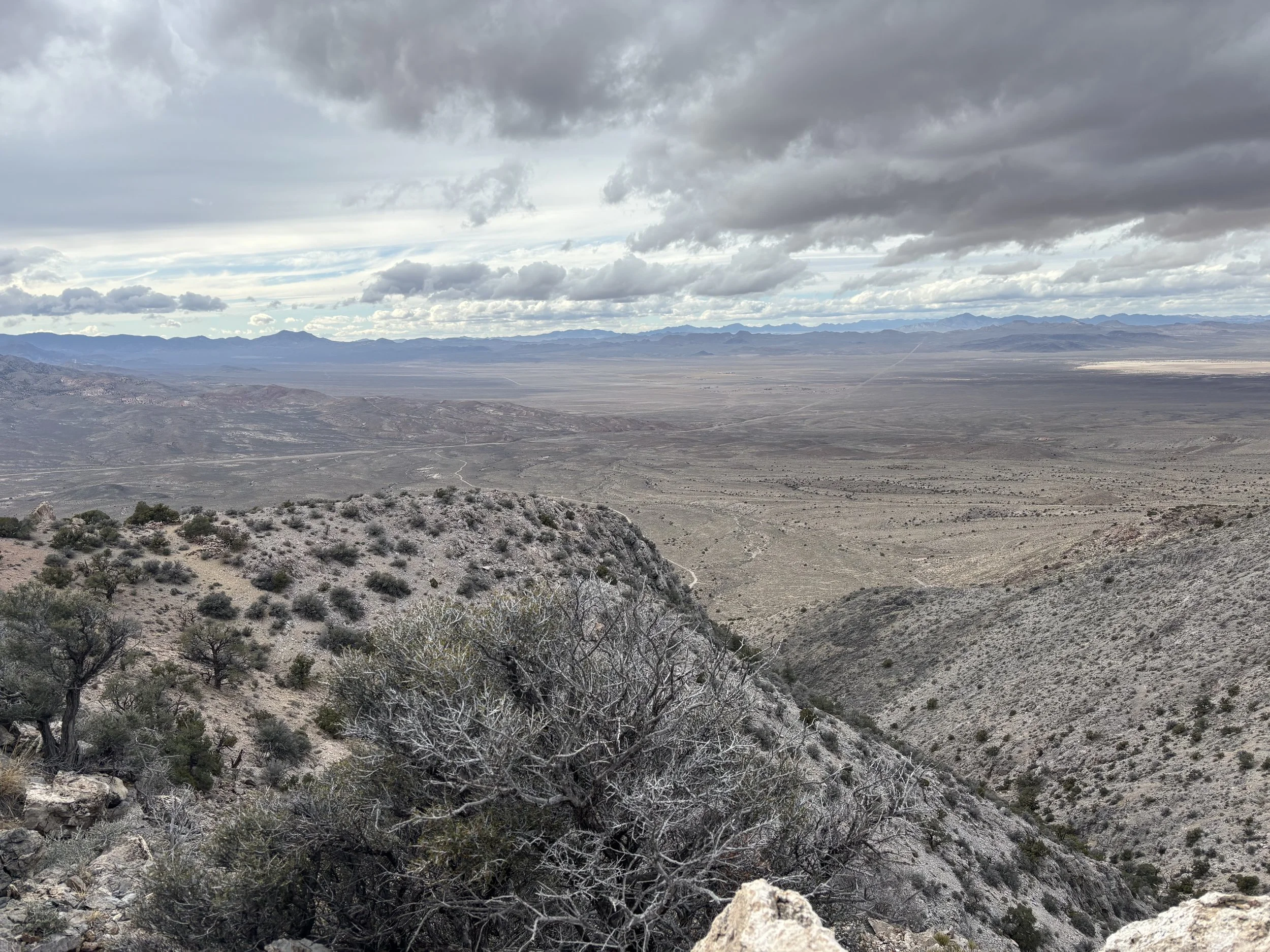
View of the Tem Piute Silver Project (slopes below the vantage point) from the top of the Timpahute Range.
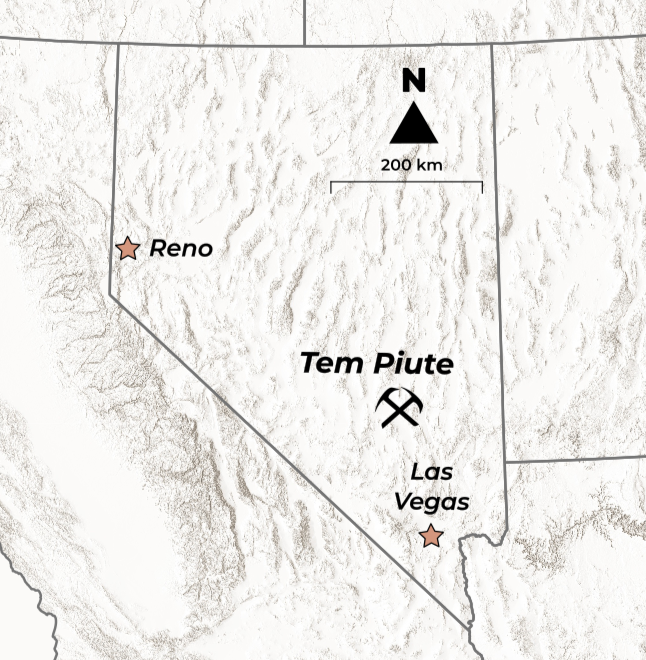
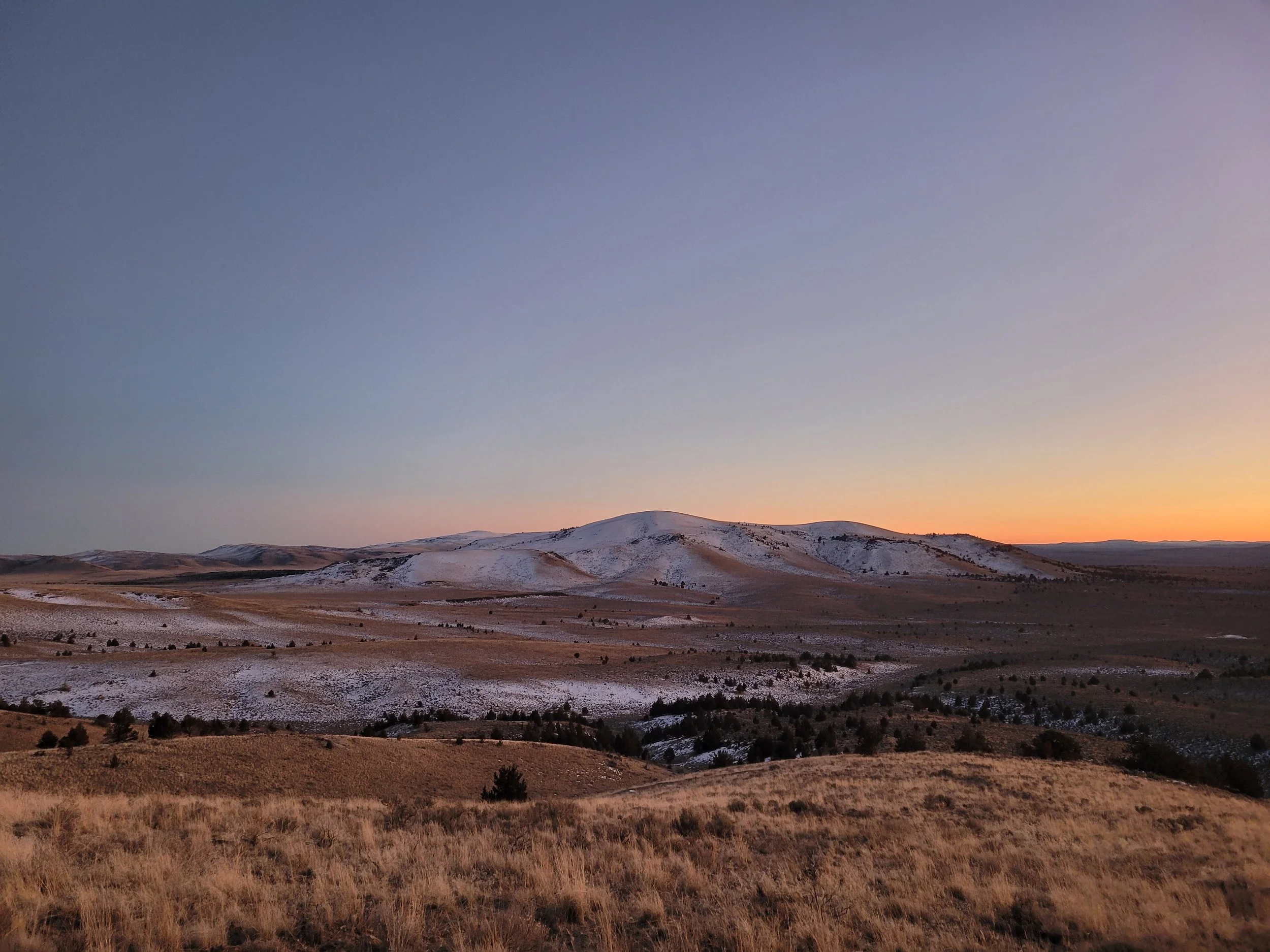
Location of the Tem Piute Silver Project in southern Nevada.
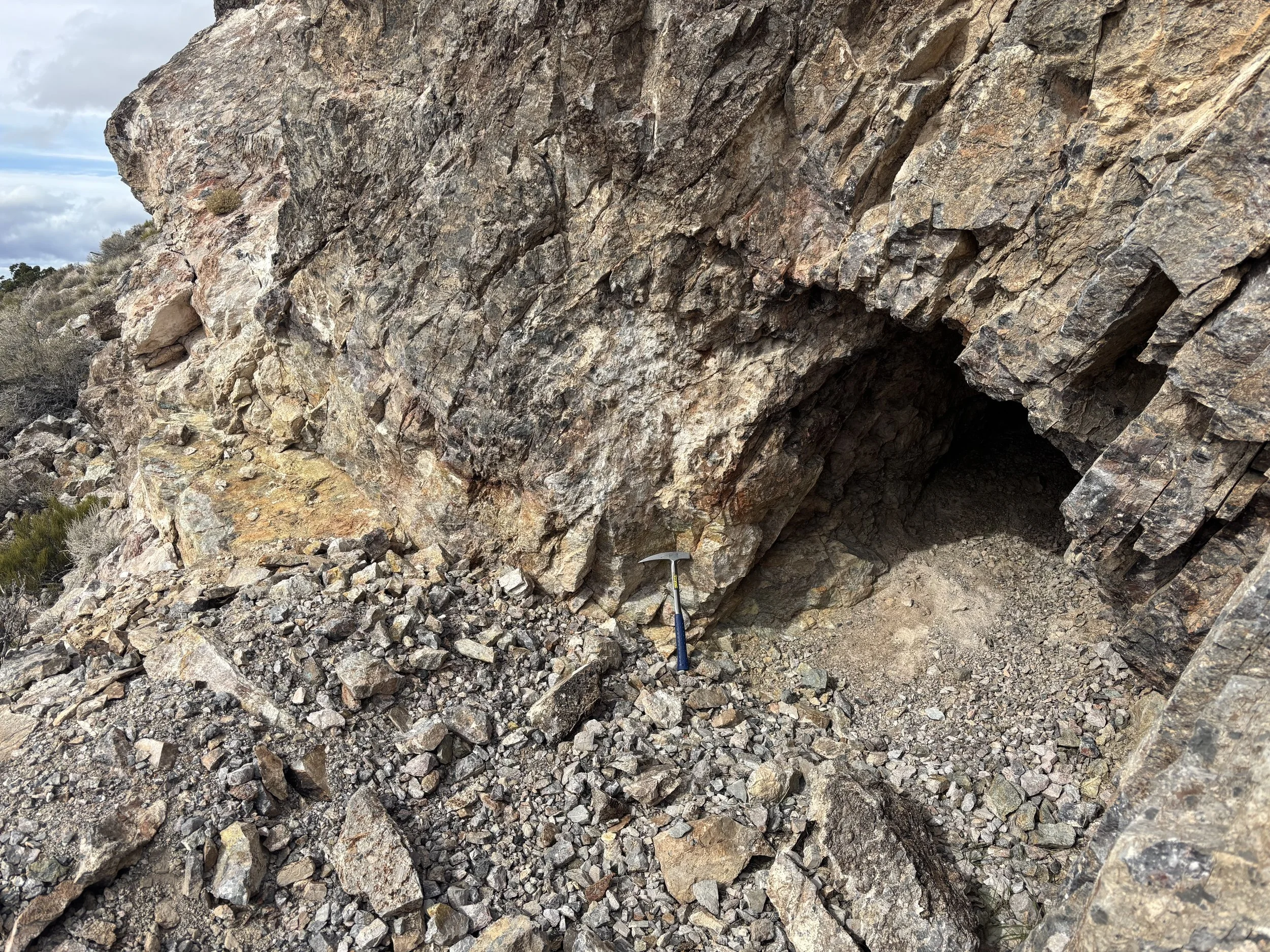
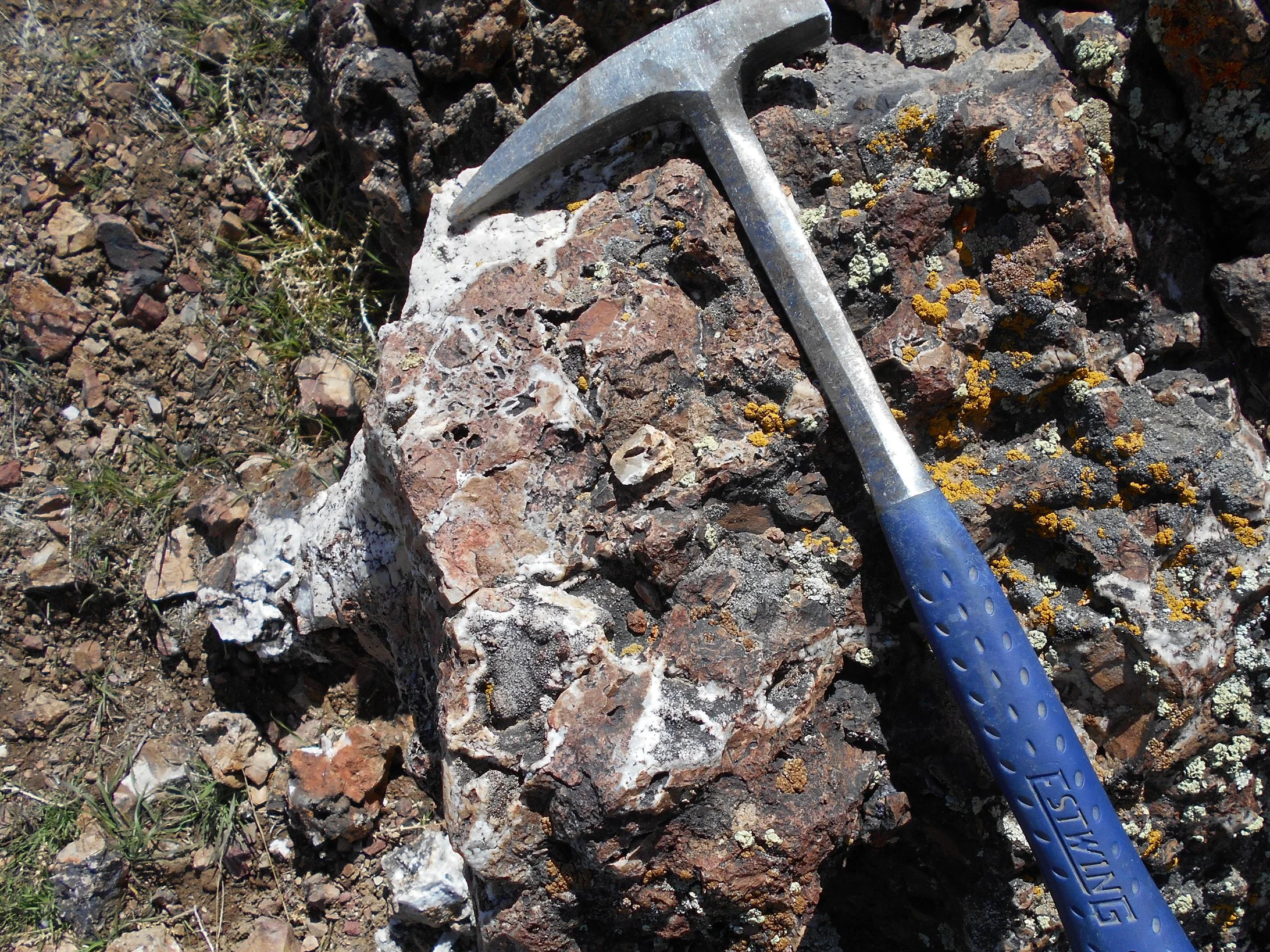
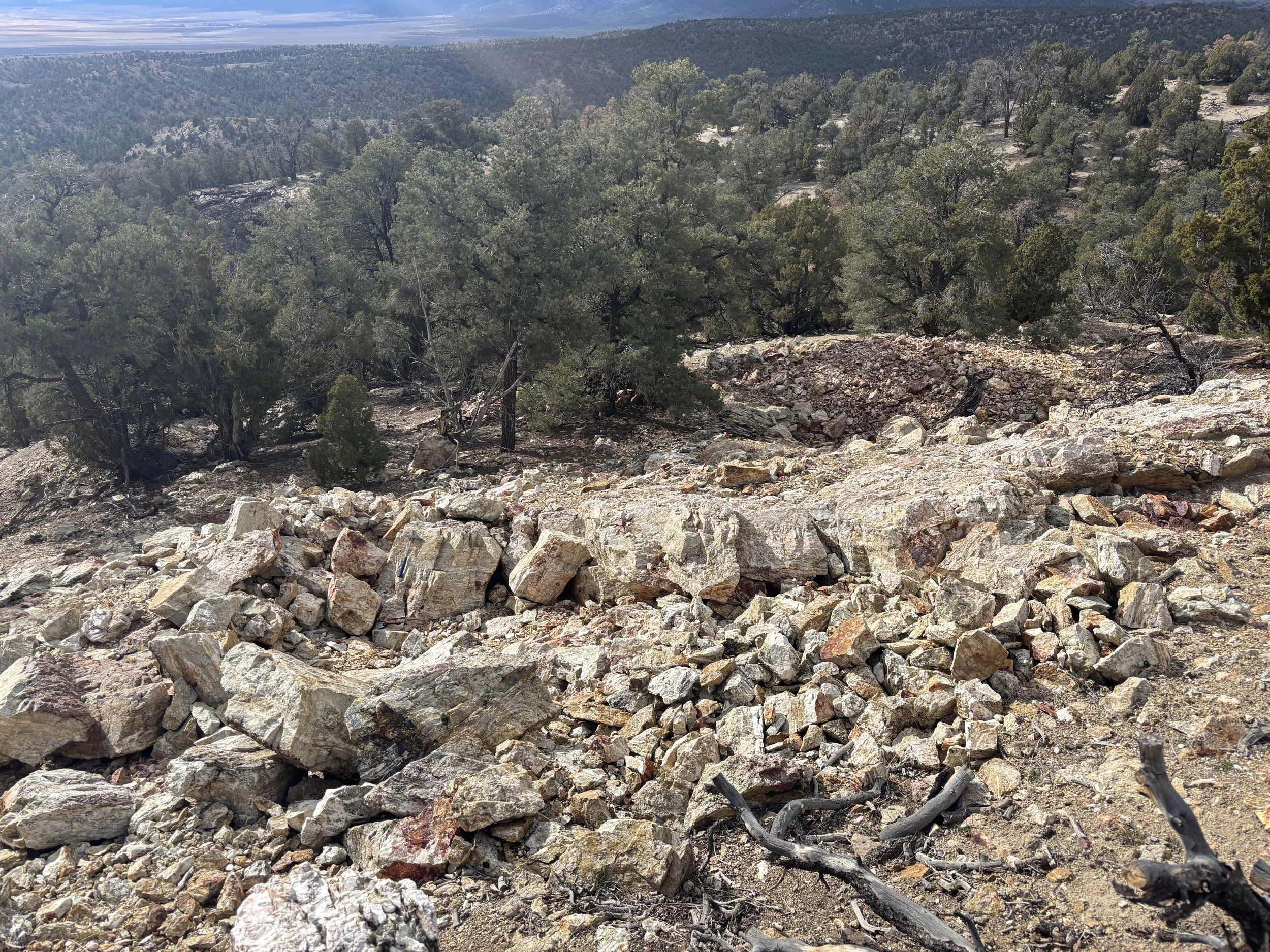
Adit driven into a high-grade silver vein showing at Tem Piute. Mineralized silver vein is the horizontal feature behind the rock hammer with abundant iron oxide (orange), jarosite (yellow) and chlorargyrite (yellow/green).
Highlights
• Commodity: Silver
• Deposit Type: High-Grade Silver Veins with Carbonate Replacement Deposit (CRD) Potential
• Location: Lincoln County, Nevada
• Historic Grades: 400–2,500 g/t Ag
• Mineralized Strike Length: Approximately 3 km
• Status: Available for Option or Sale
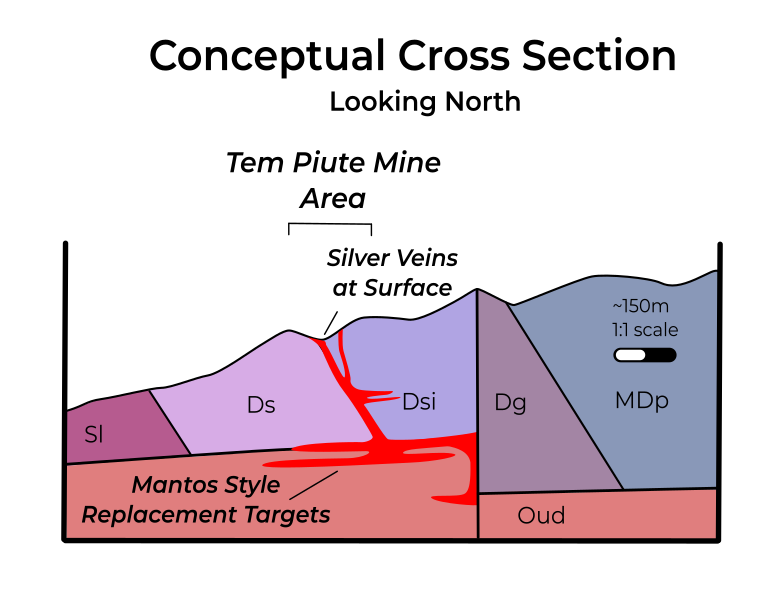
Conceptual cross section of the target concept at Tem Piute, which comprises a north-south striking zone of steeply dipping quartz veins with high-grade silver, plus the potential for mantos-style CRD mineralization at depth.
Project Overview
The Tem Piute Silver Project is located in the historic Tem Piute Mining District of Lincoln County, Nevada, approximately 10 km east of Rachel and 170 km northwest of Las Vegas. The project encompasses a historically productive high-grade silver district that produced exceptionally rich ore between 1869 and the early twentieth century, with reported mined grades ranging from approximately 400 to 2,500 g/t silver. Despite its production history, the district has received relatively little systematic modern exploration.
Location and Access
On BLM ground in southern Nevada, accessible by state highway 375 and dirt/gravel roads.
Geologic Setting
The district is underlain by Paleozoic carbonate and siliciclastic rocks intruded by Tertiary felsic dikes and affected by widespread hydrothermal alteration. Mineralization occurs within quartz veins, breccias, jasperoids, and locally carbonate replacement-style bodies developed along major structural corridors. The geology indicates potential for both high-grade epithermal silver veins and replacement-style polymetallic mineralization.
Mining History
High-grade silver veins were discovered in 1868 and mined intermittently through the late nineteenth and early twentieth centuries. Historic production focused on shallow, exceptionally high-grade vein material, with reported grades commonly ranging from 400 to 2,500 g/t silver. Mining activity declined due to falling silver prices and logistical challenges rather than depletion of the district's exploration potential.
Exploration Potential
Modern exploration has been limited despite the district's favorable geology and extensive historic workings. Historic mining targeted only a small portion of the known mineralized structures, and many veins remain open along strike and at depth. Modern geological mapping, structural interpretation, geophysics, and geochemistry have not been comprehensively applied across the district.
In addition to vein-hosted mineralization, the presence of favorable carbonate host rocks and widespread hydrothermal alteration suggests potential for concealed carbonate replacement-style polymetallic mineralization beneath or adjacent to the historic workings.
Why Tem Piute?
Nevada Legacy believes the Tem Piute Silver Project represents an opportunity to re-evaluate a historically productive but underexplored Nevada silver district using modern exploration methods. The combination of high historic grades, district-scale structural controls, favorable host rocks, and limited modern exploration supports the potential for undiscovered high-grade silver mineralization and larger concealed targets.
References
Nevada Bureau of Mines, “Geology and Mineral Deposits of Lincoln County, Nevada,” Tempaiute District section.
View Our Other Projects